
Domestic PMI data, US Federal Reserve meeting minutes and the progress on India-US trade deal negotiations are likely to influence movement in the equity market in the week ahead, according to analysts. Moreover, the trading activity of foreign investors would also influence the equity market trends.

Among the Sensex constituents, Eternal, Tata Steel, Kotak Mahindra Bank, UltraTech Cement, Maruti Suzuki India, Sun Pharmaceuticals, Tech Mahindra, HDFC Bank, Tata Motors Passenger Vehicles, Infosys, Trent, Mahindra & Mahindra, Reliance Industries and HCL Technologies were the gainers. However, Asian Paints, Bharti Airtel, Bajaj Finance, PowerGrid, Axis Bank, ICICI Bank and Titan were among the laggards.

Equity markets fell on Monday, with benchmark indices recording their worst session in over two months amid caution ahead of the US Federal Reserve's (Fed's) policy announcement and renewed uncertainty over the US-India trade deal. Sustained selling by foreign portfolio investors (FPIs) also weighed on sentiment.

The US Fed's interest rate decision will be the major factor dictating trends in the domestic equity market this week, with global movements and foreign investor activity also influencing sentiment, according to analysts. Stock markets ended the last week on a subdued note, with benchmark indices Sensex and Nifty closing flat.
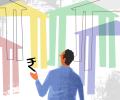
State debt is rising because revenues are disappointingly weak. Ten states have debt ratios exceeding 30 per cent. In 2023-2024, states were borrowing simply to meet day-to-day expenses, points out Debashis Basu.

The rupee plunged 38 paise to close at an all-time low of 90.32 against the US dollar on Thursday amid uncertainty over the India-US trade deal. Forex traders said the rupee is expected to trade with a negative bias as the delay in the trade deal between India and the US may continue to dent investor confidence.

Ask rediffGURU Reetika Sharma your insurance, mutual fund and personal finance-related questions.

India is among the three least-favoured Asian stock markets, according to BofA Securities whose survey found that 10 per cent of fund managers are underweight on Indian equities from a 12-month perspective.

The rupee breached 90-levels against the greenback for the first time on Wednesday, falling 6 paise to 90.02 in early trade, as banks kept buying US dollars at higher levels and FII outflows continued.

The "Sky Factory" will be one of the world's largest for electric vertical take-off and landing (eVTOL), a manufacturing and assembly process to make electric aircraft that can take off, hover, and land vertically. It will put India on the "map of next-generation aviation" and marks one of the most ambitious eVTOL initiatives in the world, said a state government statement.

In an event-heavy week, stock investors will track quarterly earnings of several bluechip firms, the likely outcome of ongoing India-US trade talks, and inflation data for market cues, analysts said on Sunday. Moreover, global market trends and trading activity of foreign investors would also guide movement in equities, they said.

Shares of tyre manufacturers have outperformed broader equity benchmarks, buoyed by multiple tailwinds. Softer raw material prices, an uptick in demand from automakers following the reduction of the goods and services tax (GST) rates, and steady replacement demand have lifted sentiment toward the sector.

Among the 11 equity sub-categories, thematic funds received the highest net inflows at Rs 9,017 crore, followed by smallcap funds at Rs 5,721 crore and flexicap funds at Rs 5,698 crore.

Inflows into equity mutual fund (MF) schemes declined for a fourth consecutive month in April, even as systematic investment plan (SIP) inflows reached a record high of about Rs 26,632 crore.

'We expect modest returns in 2026 versus the steep gains seen over the past few years.'

The rupee recovered 55 paise from its all-time low level to close at 90.38 against the US dollar after a volatile trade on Wednesday, amid suspected aggressive central bank intervention.

Finance Minister Nirmala Sitharaman's biggest challenge will be to find a new growth driver, particularly against the backdrop of a global economy ravaged by heightened uncertainty and fragmentation, financial markets on a precipice, and global commodity prices on a continued uptrend.

The surge has come alongside a decline in average issue sizes and more muted listing-day returns compared with last year.

The idea of back-loading the target of fiscal consolidation is perhaps guided by the government's desire to be prepared for any adverse developments in the coming year, points out A K Bhattacharya.

'This policy is a vision to position Karnataka as the epicentre of India's space ambitions'

Largecap equities are less volatile than mid- and smallcap stocks, making them suitable for risk-averse investors.

Among the Sensex constituents, Eternal, Trent, Bharti Airtel, Infosys, Tech Mahindra, UltraTech Cement, ICICI Bank, HDFC Bank, Bajaj Finance, Tata Consultancy Services, Bharat Electronics Ltd, Larsen & Toubro and Tata Motors Passenger Vehicles were the laggards. However, Tata Steel, Sun Pharmaceuticals, ITC, NTPC, Reliance Industries, HCL Technologies, PowerGrid, and Asian Paints were among the gainers.
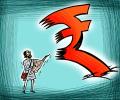
The rupee plunged 26 paise to an all-time low of 90.75 against the US dollar in intra-day trade on Monday, weighed down by uncertainty over an India-US trade deal and persistent foreign fund outflows.
Among Sensex firms, Bharat Electronics, Mahindra & Mahindra, Tata Steel, UltraTech Cement, Bajaj Finserv and Tata Motors Passenger Vehicles were the major laggards. However, Tech Mahindra, Asian Paints, Infosys, Adani Ports, Sun Pharma and HDFC Bank were the gainers.

Among the Sensex constituents, Bharat Electronics Ltd, Eternal, Trent, Tata Steel, Bajaj Finance, Adani Ports, Bajaj Finserv, State Bank of India, PowerGrid, Asian Paints, Tata Motors Passenger Vehicles, Titan, NTPC, Kotak Mahindra Bank, Larsen & Toubro and Bharti Airtel were among the laggards. Tech Mahindra, HCL Technologies, Reliance Industries and HDFC Bank were the only gainers.

Investors and startup executives are calling for extending the period for an entity to be recognised as a startup from 10 to 15 years for deep-tech companies.

Foreign investors have pulled out Rs 31,575 crore from the country's equity markets so far this month, in the wake of turbulence emanating from sweeping tariffs imposed by the US on most nations, including India. This came following a net investment of Rs 30,927 crore in the six trading sessions from March 21 to March 28. This infusion helped reduce the overall outflow for March to Rs 3,973 crore, according to data from the depositories.

From the Sensex firms, State Bank of India, Bajaj Finserv, Bajaj Finance, Maruti, HCL Tech, Larsen & Toubro, Mahindra & Mahindra and Infosys were among the major winners. However, Hindustan Unilever, Eternal, Tata Motors Passenger Vehicles, and Sun Pharma were among the laggards.

More than a third of 83 mainboard IPOs this year ended their debut sessions in the red, with losses of up to 35 per cent.

Among Sensex firms, Bajaj Finance, Bajaj Finserv, Reliance Industries, HDFC Bank, Tech Mahindra and Axis Bank were the major gainers. However, Asian Paints, HCL Tech, Titan and Hindustan Unilever were among the laggards.
Stock markets are likely to trade in a range-bound manner in a holiday-shortened week where trading activity of foreign investors, currency movement and global macroeconomic data announcements are expected to drive sentiments, analysts said. Several global markets may see subdued activity on account of Christmas and New Year holidays, an expert said.

Inflows into equity mutual fund (MF) schemes declined for the third month in a row in March even though the equity market recovered sharply. Equity MF schemes raked in a net Rs 25,082 crore in March, down 14 per cent from February.

Among the Sensex constituents, Asian Paints, Tech Mahindra, HCL Technologies, Tata Steel, Maruti Suzuki India, Sun Pharmaceuticals, Tata Consultancy Services, ICICI Bank, Bajaj Finance, UltraTech Cement, Mahindra & Mahindra and Tata Motors Passenger Vehicles were the laggards. However, Eternal, Titan, Adani Ports, Bharat Electronics Ltd, State Bank of India, Bajaj Finserv, NTPC and Bharti Airtel were among the gainers.
Among Sensex firms, Tech Mahindra, Infosys, Bajaj Finance, Bajaj Finserv, Eternal, Adani Ports, Hindustan Unilever and Bharat Electronics were the major laggards. However, Bharti Airtel, Axis Bank, Asian Paints and Titan were among the gainers.

'...not merely in managing fiscal mathematics, but in demonstrating conservatism and prudence within that framework.' 'Looking forward, we believe sufficient growth drivers exist -- ranging from government reforms to revival in consumption to favourable monsoons. Numerous factors support the Indian economy.'

'A breakout above 158,000 to 160,000 could trigger the next leg higher toward 165,000 to 170,000.'
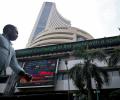
From the Sensex pack, Asian Paints, ICICI Bank, PowerGrid, Larsen & Toubro, Bajaj Finserv, Bharti Airtel, Sun Pharmaceuticals, Maruti Suzuki India, Axis Bank, UltraTech Cement and HCL Technologies were the only gainers. On the other hand, Eternal, Tata Motors' commercial vehicles arm, Mahindra & Mahindra, Tata Steel, Bharat Electronics Ltd, Tata Motors Passenger Vehicles, Trent, Tata Consultancy Services, Hindustan Unilever, and Infosys were among the laggards.
Inflation data, quarterly earnings and global trends will be the major driving factors for stock markets this week, analysts said. Moreover, the trading activity of foreign investors would also influence the equity market trends.

Over 50 per cent, or 660 stocks, from the BSE 1000 index recorded negative returns during CY25.

From the Sensex pack, Eternal, Bharat Electronics Ltd, Trent, Axis Bank, State Bank of India, Bajaj Finance, Sun Pharmaceuticals, Asian Paints, Adani Ports, Hindustan Unilever, Reliance Industries, ITC, PowerGrid, Tata Motors Ltd's Commercial Vehicles business, and Bajaj Finserv were the gainers. Infosys, Tata Motors Passenger Vehicles, Tata Steel, ICICI Bank, Tech Mahindra, Titan, UltraTech Cement, Maruti Suzuki India, and Larsen & Toubro were the laggards.
